9. Inspiration - 4 books about coaching and not only for coaches

Updated: Jan 12

Working with habits is an essential part of coaching and therapeutic practice, yet it is still underestimated or not fully understood by many professionals. Coaches, therapists, and helping practitioners often focus on insight, motivation, or awareness, while real and lasting change happens at the level of repeated behavior. From my own experience, working with habits is not optional - it is foundational.
In my daily practice, I apply habit-based principles not only in coaching sessions, but also in hypnosis and hypnocoaching. Across all these modalities, the core process of habit change remains the same: understanding triggers, shaping responses, reinforcing repetition, and working with the subconscious rather than against it. Whether we call it habit formation, behavioral conditioning, or subconscious programming, the underlying mechanisms are remarkably consistent.
The four books reviewed here - The Power of Habit, Tiny Habits, The Habit Revolution, and Atomic Habits - each approach habits from a slightly different angle, yet together they create a comprehensive and practical map of how habits really work. This review series is intended for coaches, therapists, and practitioners who want to deepen their understanding of habit change and consciously integrate it into their professional work, rather than using habit tools intuitively or accidentally.
1. Book: The Habit Revolution by Dr Gina Cleo
1.1 About the Book
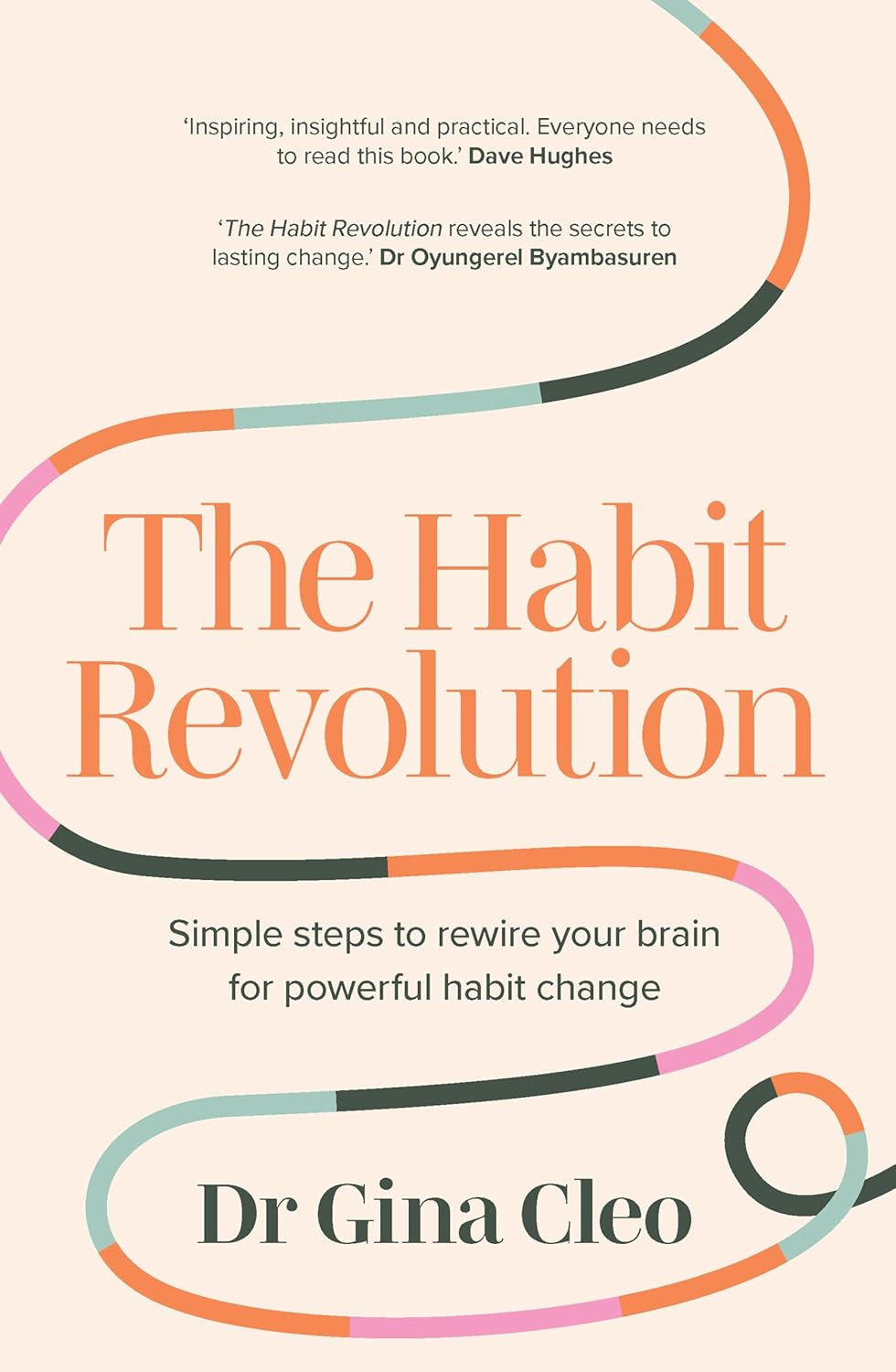
The Habit Revolution by Dr Gina Cleo is an evidence-based, practical guide to understanding, creating, and changing habits through neuroscience rather than willpower. Drawing on her doctoral research and multiple randomized controlled trials, Cleo explains how habits are formed in the subconscious brain and why lasting change depends on consistency, context, and repetition rather than motivation alone. The book walks the reader step by step from defining what habits are, through identifying triggers, to creating new habits and breaking old ones using simple, structured frameworks such as cue–response associations, micro habits, and implementation intentions (“If… then…” plans).
The book is intentionally designed as a “personal habit coach.” Each chapter builds logically on the previous one and includes reflective exercises that turn theory into practice. Cleo repeatedly emphasizes that habits are neutral, not good or bad, and that sustainable change happens when behaviors become automatic. A key message is that success is not a finish line but a system: small actions performed consistently in stable contexts gradually rewire the brain.
1.2 Interesting insights
One of the most powerful insights of the book is the clear distinction between intention and habit. Cleo shows that intentions belong to the reflective brain, while habits are driven by the impulsive, automatic system. This explains why people can strongly want change yet repeatedly fail: they are trying to override habits with intention. Another important insight is the concept of micro habits - tiny, low-effort actions that require minimal motivation but, through repetition, lead to automaticity. This reframes change from “trying harder” to “designing easier behaviors.”
The book also highlights behavioral flexibility as a critical skill: deliberately doing things differently to weaken rigid habit loops and expand behavioral options. Equally valuable is the emphasis on self-compassion during setbacks, positioning failure not as a lack of discipline but as a normal part of habit change. From an ICF perspective, this aligns strongly with Competency 8: Facilitates Client Growth, for example when a coach helps a client design an “If… then…” plan after a relapse, rather than judging the setback.
1.3 What makes a book good
The strength of The Habit Revolution lies in its clarity, scientific grounding, and coachability. Complex neuroscience concepts such as dopamine, automaticity, and ego depletion are explained in accessible language without losing accuracy. The frameworks are simple enough to be applied immediately, yet robust enough to support long-term change. This makes the book especially valuable for coaches, trainers, and leaders working with behavior change.
From an ICF competency lens, the book strongly supports Competency 3: Establishes and Maintains Agreements and Competency 4: Cultivates Trust and Safety. For example, reframing habits as neutral reduces shame and defensiveness, helping clients feel safe to explore their patterns honestly. A coach might ask: “What is the smallest version of this habit you could do consistently?” - a direct application of Cleo’s micro-habit principle aligned with Competency 7: Evokes Awareness. The book’s emphasis on systems over willpower fits well with professional coaching ethics and evidence-based practice.
1.4 What is the shortcoming of the book
The main limitation of The Habit Revolution is that it can feel overly optimistic for readers facing complex psychological or systemic challenges. While the author clearly states that the book is not a substitute for therapy, some readers may underestimate how trauma, mental health conditions, or organizational constraints can interfere with habit change. Additionally, experienced practitioners may find certain concepts familiar, as they overlap with existing models such as COM-B, implementation intentions, or behavioral activation.
From an ICF perspective, this highlights the importance of Competency 2: Embodies a Coaching Mindset - knowing when habit tools are appropriate and when referral or deeper exploration is needed. For example, a coach working with a client experiencing burnout should not push habit consistency without first addressing capacity and recovery. The book is strongest as a practical manual for behavior design, but it requires professional judgment to integrate responsibly into coaching practice.
2. Book: Tiny Habits by BJ Fogg
2.1 About the Book

Tiny Habits by BJ Fogg is a practical, behavior-science-based book that explains how lasting behavior change happens through very small actions rather than motivation or willpower. Fogg introduces the Behavior Model (B = MAP), which states that behavior occurs when Motivation, Ability, and Prompt converge at the same moment. The core idea of the book is that change becomes reliable when behaviors are made tiny, easy to do, and anchored to existing routines. Instead of setting ambitious goals, readers are guided to design behaviors that are so small they feel almost effortless, such as doing one push-up or flossing one tooth.
The book is written in an accessible, instructional style and includes step-by-step recipes for creating habits. Fogg emphasizes that emotions, especially positive emotions like celebration, are crucial for habit formation because they help the brain encode behaviors as successful. The approach removes shame and failure from behavior change and reframes it as a design problem rather than a character flaw. From an ICF perspective, this strongly aligns with Competency 7: Evokes Awareness, as the book helps clients understand why previous change attempts failed and how to redesign behavior in a more realistic way.
2.2 Interesting insights
One of the most valuable insights of Tiny Habits is the shift from outcome goals to behavior design. Fogg shows that motivation is unreliable and should not be the foundation of change. Instead, increasing ability by making behaviors easier is the fastest and most ethical lever for change. Another key insight is the role of prompts: even when motivation and ability are present, behavior will not happen without a clear trigger. Anchoring a tiny habit to an existing routine (“After I brush my teeth, I will floss one tooth”) makes change predictable.
A further important insight is the use of celebration. Fogg demonstrates that immediate positive emotion wires habits faster than repetition alone. This insight directly supports ICF Competency 8: Facilitates Client Growth, for example when a coach helps a client acknowledge small wins instead of focusing only on gaps. In coaching practice, this might look like asking: “What tiny version of this behavior feels easy enough to succeed every day?” This question mirrors the Tiny Habits method and helps clients experience competence and progress early.
2.3 What makes a book good
What makes Tiny Habits particularly strong is its simplicity without superficiality. The models are easy to remember, yet grounded in decades of behavioral research. The book offers clear language, concrete examples, and repeatable tools that can be used immediately in coaching, leadership, health, and education contexts. Its non-judgmental tone creates psychological safety and removes moral pressure from change.
From an ICF lens, the book strongly supports Competency 4: Cultivates Trust and Safety. By removing blame and emphasizing experimentation, clients feel safe to explore change without fear of failure. It also aligns with Competency 6: Listens Actively, as coaches using this approach must pay close attention to what feels “easy” or “hard” for the client rather than imposing external standards. The book is especially useful for coaches because it translates seamlessly into practical coaching questions and experiments.
2.4 What is the shortcoming of the book
The main limitation of Tiny Habits is that it may underestimate emotional, systemic, or trauma-related barriers to change. While the method works exceptionally well for simple behaviors, some readers may try to apply it to deeply complex life challenges where safety, identity, or psychological healing are required first. Additionally, experienced practitioners may find parts of the book repetitive once the core model is understood.
From an ICF standpoint, this highlights the importance of Competency 2: Embodies a Coaching Mindset - knowing when habit design is appropriate and when deeper exploration or referral is needed. For example, a coach should not use tiny habits to “optimize” a client who is emotionally overwhelmed without first addressing capacity and wellbeing. The book is best used as a powerful tool within professional judgment, not as a universal solution.
3. Book: The Power of Habit by Charles Duhigg
3.1 About the Book
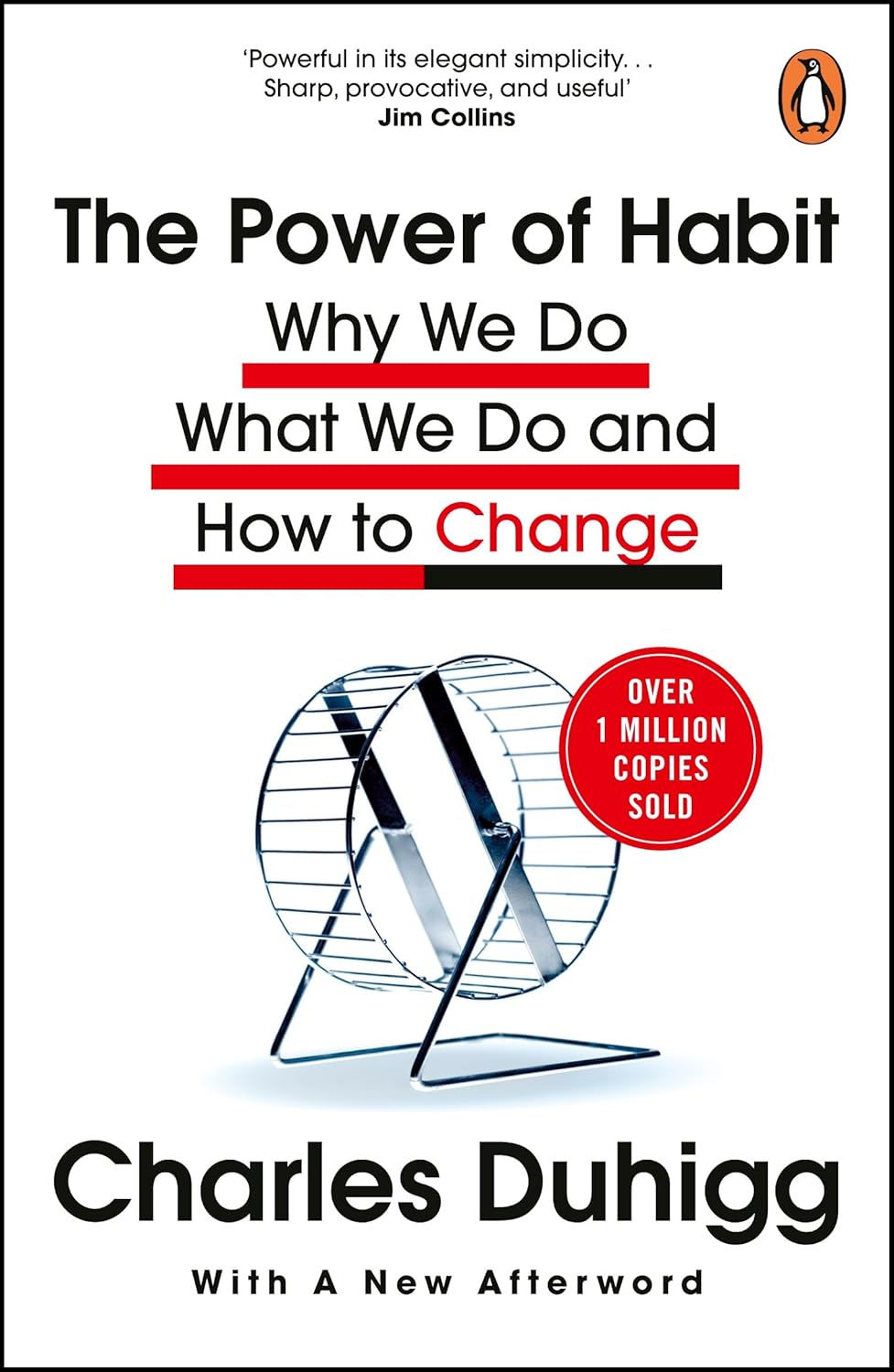
The Power of Habit by Charles Duhigg is a narrative-driven, research-based exploration of how habits work in individuals, organizations, and societies. The book introduces the famous habit loop—cue, routine, reward—and explains how this loop operates at a neurological level. Through journalistic storytelling, Duhigg connects neuroscience, psychology, and real-world case studies, ranging from personal change to corporate transformation and social movements.
Rather than presenting a step-by-step manual, the book focuses on understanding patterns of behavior and showing that habits are not destiny. A central theme is that habits can be changed once they are understood, especially by keeping the cue and reward while deliberately reshaping the routine. From an ICF perspective, the book strongly supports Competency 7: Evokes Awareness, as it equips clients with language and insight to observe their own automatic behaviors and recognize the systems behind them.
3.2 Interesting insights
One of the most important insights of The Power of Habit is that willpower itself can become a habit. Duhigg shows that self-discipline is not merely a trait but a trainable pattern shaped by routines and environment. Another powerful insight is the concept of keystone habits - habits that trigger positive ripple effects across many areas of life, such as exercise or family dinners. Changing one keystone habit can unintentionally improve multiple behaviors at once.
The book also highlights the social dimension of habits, demonstrating how group norms and identity influence behavior change. From an ICF coaching lens, this aligns well with Competency 5: Maintains Presence and Competency 8: Facilitates Client Growth, especially when a coach explores not only what a client does, but who they are becoming through new habits. A coaching example might be asking: “Which small habit, if changed, would positively affect several areas of your life?”—a direct application of the keystone habit concept.
3.3 What makes a book good
What makes The Power of Habit compelling is its storytelling strength combined with scientific credibility. Complex ideas about the brain and behavior are made memorable through vivid stories and concrete examples. The book does not oversimplify habit change but respects its complexity while still offering hope and direction. Its broad scope—from personal habits to organizational culture—makes it relevant for coaches, leaders, and change agents alike.
From an ICF competency perspective, the book supports Competency 4: Cultivates Trust and Safety, as it normalizes struggle and removes moral judgment from habit failure. It also complements Competency 6: Listens Actively, because understanding a client’s habit loop requires deep attention to context, triggers, and rewards rather than surface behavior. The book’s strength lies in building deep understanding, which is often the first prerequisite for sustainable change in coaching.
3.4 What is the shortcoming of the book
The main shortcoming of The Power of Habit is that it offers more explanation than instruction. Readers seeking a clear, step-by-step method for habit change may find the book inspirational but not sufficiently actionable. Some examples simplify complex human behavior, which may lead readers to underestimate emotional, systemic, or trauma-related factors. Additionally, the book occasionally implies that awareness alone is enough for change, which is not always true in practice.
From an ICF viewpoint, this reinforces the importance of Competency 2: Embodies a Coaching Mindset - recognizing that insight must be paired with experimentation, support, and sometimes referral. For example, a coach should not assume that mapping a habit loop will automatically result in change without addressing readiness and capacity. The book is most powerful when used as a foundation for awareness, complemented by coaching processes that support action and accountability.
4. Book: Atomic Habits by James Clear
4.1 About the Book
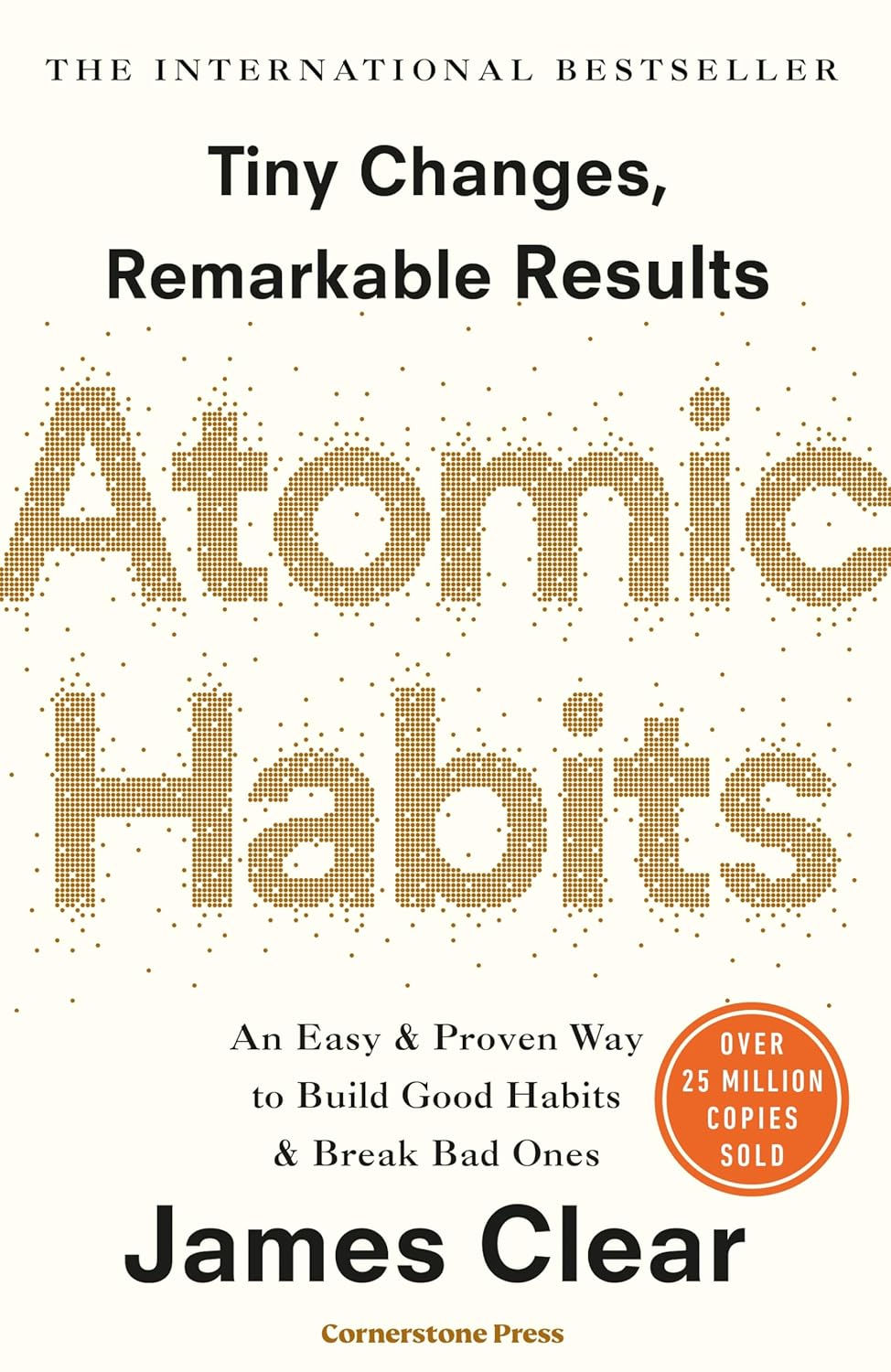
Atomic Habits by James Clear is a practical and highly structured book about building good habits and breaking bad ones through small, incremental changes. The core premise is that tiny habits, repeated consistently, compound into remarkable results over time. Clear introduces a clear framework known as the Four Laws of Behavior Change: make it obvious, make it attractive, make it easy, and make it satisfying. Rather than focusing on goals, the book emphasizes building systems and shaping identity, arguing that lasting change occurs when behaviors align with how people see themselves.
The book blends behavioral science, psychology, and real-life examples, making abstract concepts accessible and actionable. Clear repeatedly highlights that habits are not about motivation or self-discipline but about environment design and repetition. From an ICF perspective, the book aligns strongly with Competency 7: Evokes Awareness, as it helps clients shift their attention from outcomes (“What do I want to achieve?”) to processes and identity (“Who do I want to become?”). A coaching example inspired by the book would be asking a client: “What would a person who already has this habit do today?”
4.2 Interesting insights
One of the most powerful insights of Atomic Habits is the focus on identity-based habits. Clear argues that real change is not about what you want to achieve but about who you believe you are. Each small action becomes a “vote” for the type of person you are becoming. Another key insight is the role of environment over willpower: people are more likely to succeed when their surroundings make desired behaviors easier and undesired behaviors harder. This reframes habit change as a design challenge rather than a personal struggle.
The concept of habit stacking, where a new habit is attached to an existing one, is especially useful in coaching practice. From an ICF lens, this supports Competency 8: Facilitates Client Growth, as it enables clients to experiment safely with small behavioral changes. A coaching example could be: “After which existing routine could you naturally attach this new habit?” This question helps the client design sustainable action without pressure.
4.3 What makes a book good
What makes Atomic Habits exceptionally good is its clarity, structure, and immediate applicability. The concepts are organized logically, repeated consistently, and reinforced through memorable examples and summaries. The language is simple without being simplistic, making the book accessible to a broad audience while still grounded in research. The strong emphasis on systems, feedback loops, and environment makes it especially relevant for professionals working with change.
From an ICF competency perspective, the book strongly supports Competency 3: Establishes and Maintains Agreements and Competency 4: Cultivates Trust and Safety. By focusing on small steps and experimentation, clients are less likely to feel overwhelmed or judged. A coach might apply this by agreeing with a client on a very small, clearly defined action that fits their reality, reinforcing confidence and ownership.
4.4 What is the shortcoming of the book
The main shortcoming of Atomic Habits is that it can oversimplify complex human challenges. While the frameworks work extremely well for behavioral change, they may not fully address emotional wounds, trauma, or deeply ingrained beliefs that require therapeutic or systemic work. Some experienced readers may also find the ideas familiar, as they overlap with existing habit and behavior-change models.
From an ICF standpoint, this underlines the importance of Competency 2: Embodies a Coaching Mindset - recognizing the limits of tools and respecting the client’s whole context. For example, a coach should avoid pushing habit optimization when a client is dealing with burnout or emotional overload. The book is most effective when used as a practical toolkit within a broader coaching relationship that honors readiness, capacity, and wellbeing.
Conclusion / Summary
Taken together, these four books clearly show that habit change is not about willpower, discipline, or personality, but about design, repetition, and alignment with the subconscious mind. Each author emphasizes different elements - awareness, simplicity, neuroscience, identity, or systems - but they all point to the same truth: sustainable change emerges from small, consistent actions embedded in everyday life.
From a coaching and therapeutic perspective, habits form the bridge between insight and real-world change. Awareness without habit change often leads to frustration, while habit change without awareness lacks depth and meaning. When these two are combined, clients gain both understanding and agency. My own experience across coaching, hypnosis, and hypnocoaching confirms that regardless of the method, the core habit process remains universal.
These books are therefore not just recommended reading; they are practical companions for anyone working with human change. They offer language, structure, and evidence that help professionals move from intention to integration, and from insight to embodied transformation.


